• Outdoors
  • pan_tool Manual job
  • Onsite
  • Vehicles-Machinery
  • Engineering-Technical

What does a road safety marking operative do?

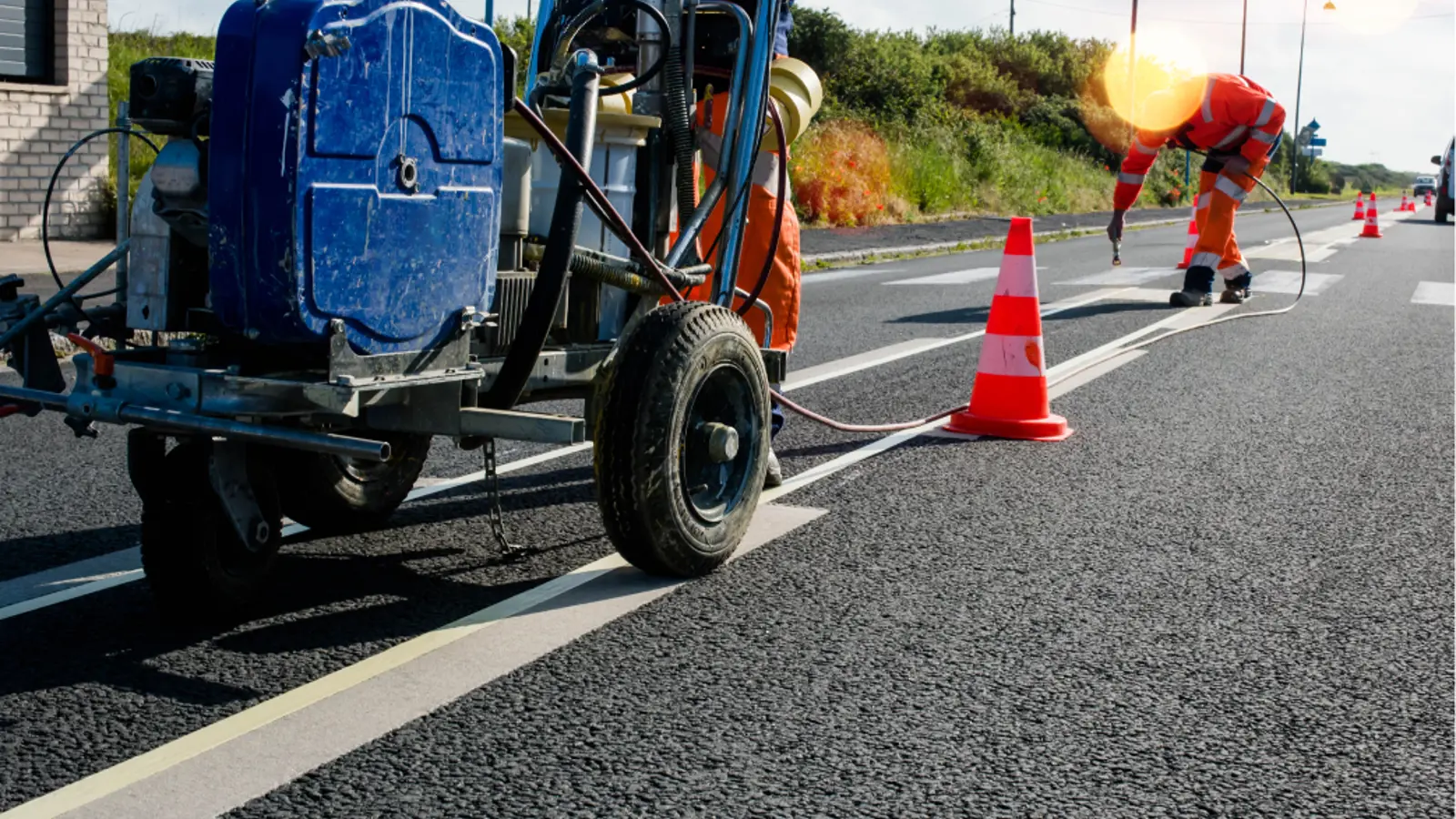
As a road safety marking operative, you’ll be responsible for applying a range of permanent and temporary markings to surfaces like motorways, car parks, playgrounds, airfields and warehouses. 

The job can involve working with both hot-applied materials (heated to around 200°C) and cold-applied systems, each with their own safety considerations. You'll need to be alert to hazards and committed to working safely at all times. 

The role of a road safety marking operative involves the following duties: 

  • Laying thermoplastic and painted markings 

  • Installing reflective road studs (cat’s eyes) 

  • Reading and interpreting job specifications or drawings 

  • Measuring, setting out and aligning markings correctly 

  • Using specialist machinery and equipment 

  • Removing or replacing existing markings 

  • Ensuring high health and safety standards on site 

  • Liaising with clients, team members, and supervisors. 
How to become a road safety marking operative

There are several routes to becoming a road safety marking operative. You could complete a specialist training programme, an apprenticeship, or apply directly to an employer if you have the right skills and attitude. 

Many employers are open to hiring those without prior experience, as training is provided on the job and through industry-approved programmes. 

You may need a Construction Skills Certification Scheme (CSCS) card to work on construction sites. 

 College/training provider 

Although there are no formal qualifications required, training is usually carried out after you've started working in the role. New starters will typically undertake the Road Safety Markings Specialist Applied-skills Programme (SAP), which is available at the RSMA Training Centre in Gainsborough, Lincolnshire. 

This structured training programme – similar to an apprenticeship – combines hands-on learning with classroom-based teaching and is delivered in partnership with CITB. 

You will learn about: 

  • Road marking health and safety practices 
  • Application and removal techniques 
  • Core traffic management principles 
  • Fire safety and dealing with hazardous materials 
  • Inclusion, conflict resolution and mental health awareness 

Apprenticeship 

There is currently no formal apprenticeship route into road marking, but the SAP is an equivalent sector-recognised training programme. You will be employed full-time by a company while attending off-site training throughout the year. 

Employers often recruit at careers fairs or through direct applications. 

Work 

You can apply directly to a company that specialises in road marking or highways maintenance. Some experience in construction or working outdoors may help, but employers are primarily looking for candidates who are reliable, hard-working, and willing to learn. 

A full UK driving licence is usually required, and many employers will support you in gaining one if needed. Some operatives also go on to train for LGV Category C (HGV) licences. 

Work experience 

Work experience is a great way to learn more about the industry. Try contacting local road maintenance or civil engineering firms to ask if they offer placements or shadowing opportunities. This can help you gain insight into the role and improve your CV. 

Skills 

A road safety marking operative should be: 

  • Practical and good with your hands 
  • Comfortable working outdoors in all weather 
  • Aware of health and safety protocols 
  • Able to work under minimal supervision 
  • A good communicator and team player 
  • Calm and focused in high-pressure situations 
  • Willing to travel and work varied shifts 
  • IT-literate and able to use handheld devices. 

Qualifications

There are no formal entry requirements, but you will receive on-the-job training and complete industry-recognised qualifications such as the NVQ Level 2 in Road Safety Marking. 

You can gain a SAP qualification here: 

Specialist applied-skills programmes (SAPs)

Ongoing training is expected throughout your career, including refresher courses and CPD. 

Most employers require: 

  • A full UK driving licence 
  • CSCS or equivalent card scheme 
  • Participation in certified training and development. 

Some operatives may go on to achieve Level 3 qualifications and progress to supervisory roles. 

How much could you earn as a road safety marking operative?

How much could you earn as a road safety marking operative?

The expected salary for a road safety marking operative varies as you become more experienced. 

  • Newly trained road safety marking operatives can earn from £26,000  

  • Experienced road safety marking operatives can earn  up to £35,000. 

Salaries depend on location, employer, level of responsibility, any overtime you may do, and whether you have completed an industry recognised training route.  

*Salaries have been collected from multiple industry sources. 

Your future career

With experience and additional qualifications, you could move into supervisory or team leader roles. There are also opportunities to specialise in different marking techniques, traffic management, or move into operations management. 

Some experienced operatives start their own businesses or become assessors and trainers for new recruits. 

You can also stay up to date with career and training opportunities by visiting the Road Safety Markings Association (RSMA) at rsma.co.uk. 

Career path and progression

With experience and additional qualifications, you could move into supervisory or team leader roles. There are also opportunities to specialise in different marking techniques, traffic management, or move into operations management. 

Some experienced operatives start their own businesses or become assessors and trainers for new recruits. 

You can also stay up to date with career and training opportunities by visiting the Road Safety Markings Association (RSMA) at rsma.co.uk.